
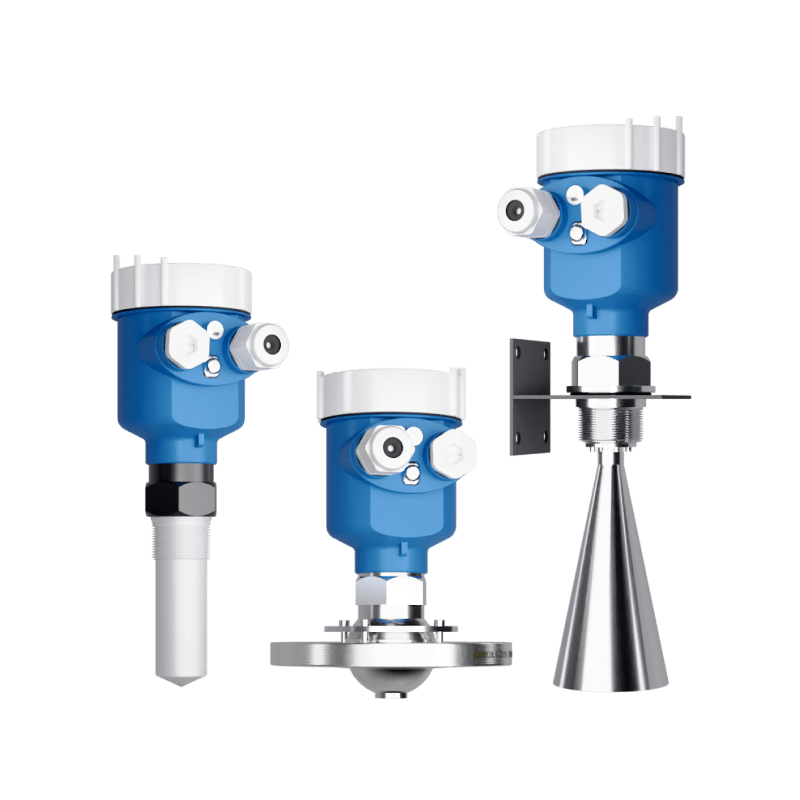
26GHz Radar Level Gauge
Commonly Measured Media
Sewage level / Acid-base salt pool / Tank level / Lake and reservoir / River level / Other liquid levels
Features of 26G Radar Level Meter
Compact antenna for easy installation; non-contact measurement with no wear or contamination.
Resists corrosion, foam, water vapor, temperature and pressure fluctuations.
High adaptability to dusty working conditions.
Short wavelength delivers superior reflection on inclined solid materials.
Narrow beam with concentrated energy, strong echo and excellent anti-interference performance.
Small dead band, accurate measurement for small tanks.
High signal-to-noise ratio, stable measurement under liquid level fluctuation.
High-frequency model, ideal for solids and low dielectric constant media.
Built-in temperature compensation to automatically eliminate temperature drift errors.
Equipped with advanced microprocessor and unique echo processing technology, the radar level gauge is applicable to various complex working conditions.
Adopting pulse operation mode, the radar level gauge features extremely low transmitting power. It can be installed inside all kinds of metal and non-metal containers, causing no harm to human bodies or the environment.
Measurement principle
The radar level antenna emits narrow microwave pulses, which travel downward through the antenna. When the microwaves hit the surface of the measured medium, they are reflected back and received by the antenna system. The signals are then sent to the electronic circuit and automatically converted into level signals. (Microwaves propagate at an extremely high speed, so the round-trip time for electromagnetic waves to reach the target and bounce back to the receiver is nearly instantaneous.)
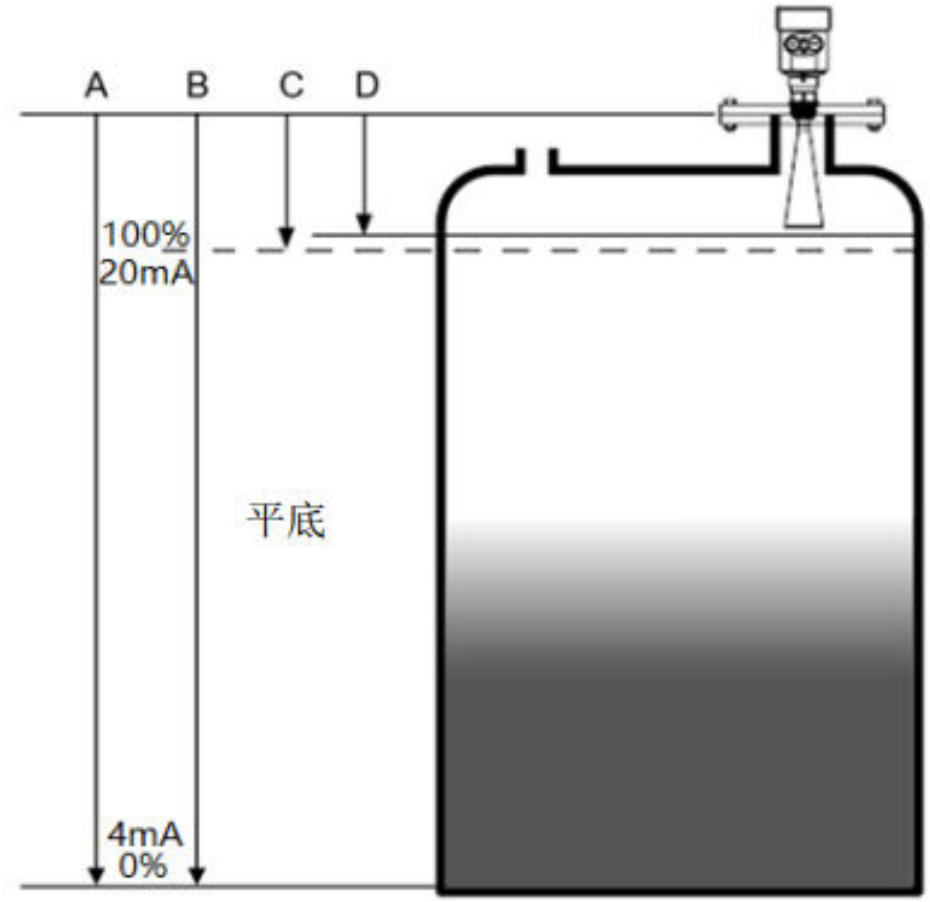
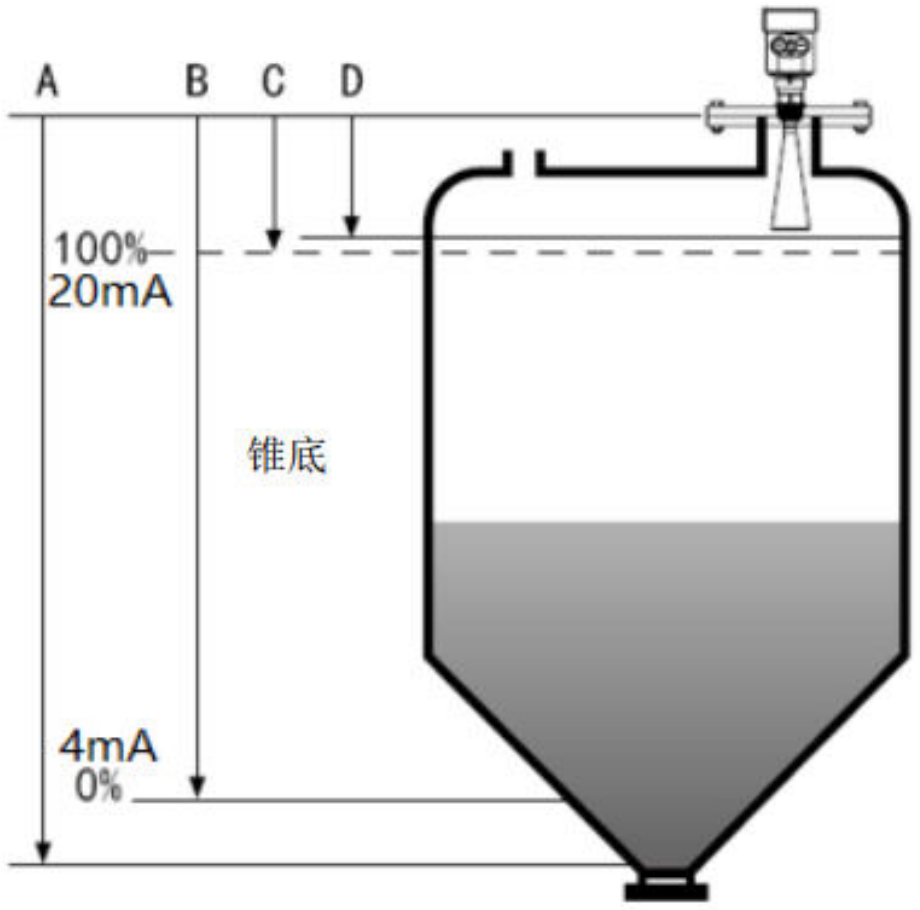
A: Range Setting B: Low Level Adjustment C: High Level Adjustment D: Dead Zone Range
The reference plane for measurement is the thread bottom surface or the sealing surface of the flange.
Note: When operating the radar level gauge, ensure the maximum material level never enters the measurement dead zone (Area D shown in the figure).
When setting the range parameters, the height of the conical section of the on-site tank must be included (refer to Part A in the figure).
What are the ways to contact us?
You can get in touch with us via social media or fill out the contact form.